Amiodarone impurities and related standards
Nothing in Amiodarone is exotic: C25H29I2NO3, 645.3, three rings, every one aromatic, a tertiary amine and a ketone. The ring count is three, three aromatic, and the molecule carries no stereocentres.
What the route contributes and what storage contributes are separate questions, and isomers sit outside both because they are present from the start. The carbon-halogen bond survives storage and leaves under strong base or catalytic hydrogenation; the dehalogenated analogue differs by a few mass units. The tertiary nitrogen oxidises to the N-oxide and dealkylates under peroxide stress; the N-oxide loses most of its retention in one step.
There are three aromatic rings here, so the molecule absorbs well and the problem becomes resolution rather than sensitivity. Quantitation needs a relative response factor, and that factor has to be measured against a qualified standard rather than assumed from the spectrum. Any analogue that keeps the ring system keeps the spectrum, so confirmation has to come from the mass trace rather than the wavelength scan. A calculated logP of 6.94 puts the compound and its lipophilic analogues at the back of the run, close enough to need a flat gradient there.
Material runs from milligram vials for method work to gram lots for qualification, and every lot is documented by a CoA, an HPLC trace and a mass spectrum rather than a catalogue figure.
Sources: DailyMed (FDA label) - amiodarone hydrochloride injection; DailyMed (FDA label) - amiodarone hydrochloride tablets.
44 reference standards related to Amiodarone held in the RSSE catalogue — pharmacopoeial impurities, non-compendial impurities, metabolites and labelled analogues where available.
In this group: 27 impurity reference standards · 6 general reference standards · 5 fine chemicals · 5 stable isotope labelled standards. CAS numbers are listed for 44 of 44; 44 entries carry a structure drawing.
On this page
N-nitroso (NDSRI) impurities of Amiodarone
The N-nitroso forms held for this substance — the structural class that the ICH M7 nitrosamine framework covers. One entry is listed below. A CAS number is not required to quote one of them.
44 reference standards
All entries — structure, identifiers and pack sizes
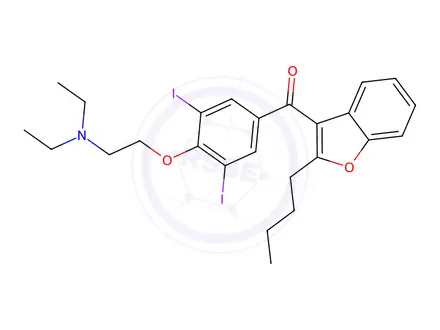
Amiodarone
BACK ORDERRS-Z401ECX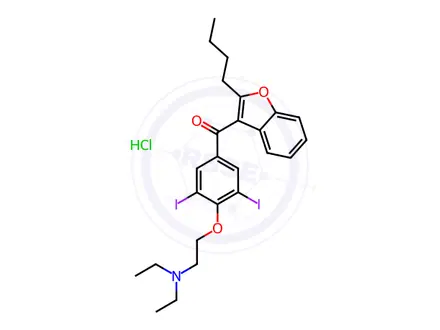
Amiodarone hydrochloride
IN STOCKRS-U059269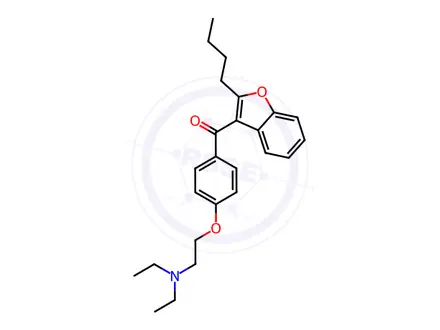
Amiodarone EP Impurity A
IN STOCKRS-A103013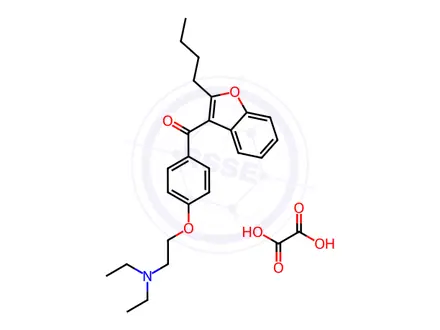
Amiodarone EP Impurity A Oxalate
BACK ORDERRS-A103023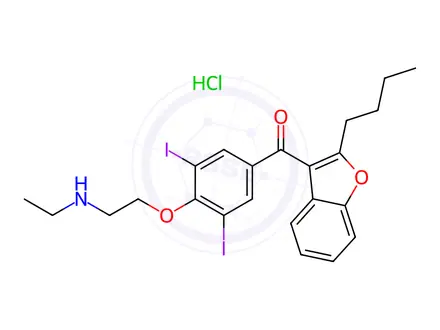
Amiodarone EP Impurity B(Hydrochloride)
BACK ORDERRS-A103022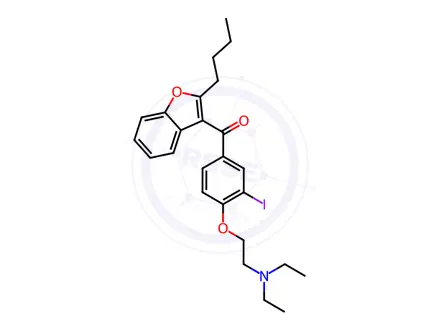
Amiodarone EP Impurity C
BACK ORDERRS-A103021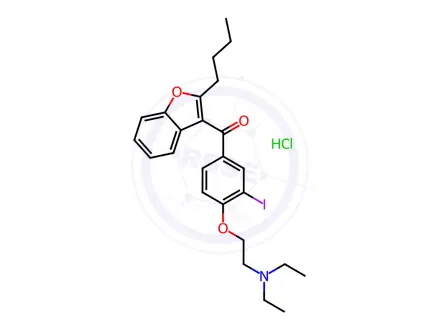
Amiodarone EP Impurity C(Hydrochloride)
BACK ORDERRS-A103005
Amiodarone EP Impurity D (Amiodarone USP Related Compound D)
IN STOCKRS-A103012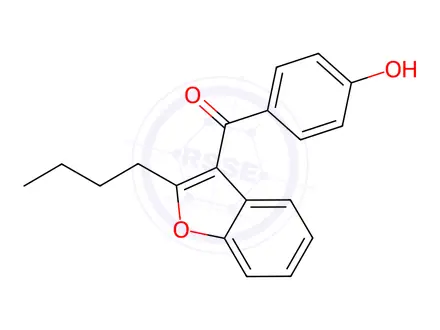
Amiodarone EP Impurity E (Amiodarone USP Related Compound E)
IN STOCKRS-A103018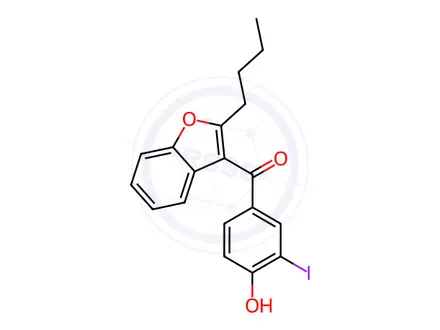
Amiodarone EP Impurity F
IN STOCKRS-A103006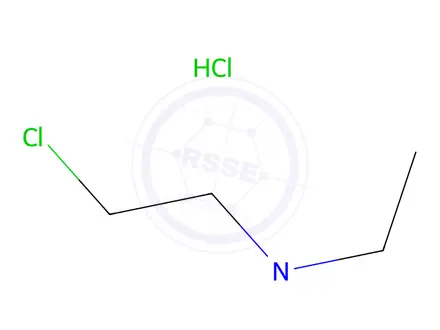
Amiodarone Hydrochloride EP Impurity H
IN STOCKRS-Z401LK9
(2-Butyl-3-benzofuranyl)[4-(2-hydroxyethoxy)-3,5-diiodophenyl]methanone
CUSTOM SYNTHESISRS-Z397QDC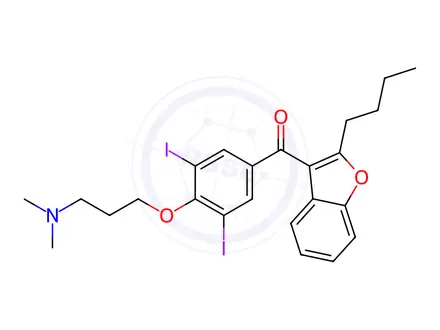
(2-Butylbenzofuran-3-yl)(4-(3-(dimethylamino)propoxy)-3,5-diiodophenyl)methanone
BACK ORDERRS-U055873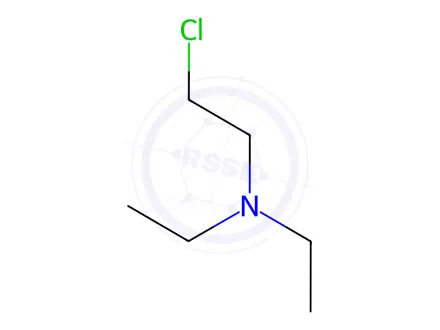
Amiodarone EP Impurity H
IN STOCKRS-U006001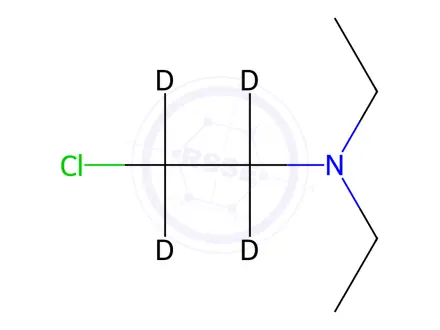
2-Chloro-N,N-diethylethyl-d4-amine
IN STOCKRS-I098157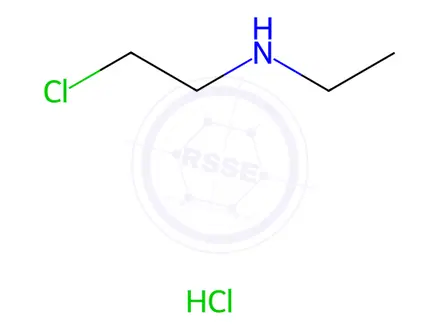
2-Chloro-N-ethylethanamine hydrochloride
CUSTOM SYNTHESISRS-U071150
2-n-Butyl-4-[(2-bromoethoxy-d4)-3,5-diiodobenzoyl]benzofuran
BACK ORDERRS-B148001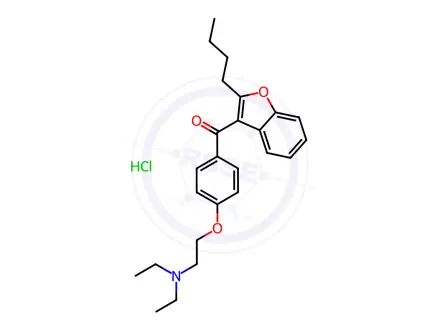
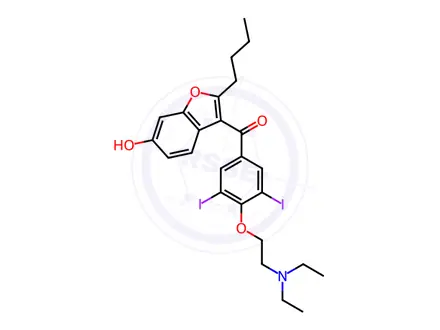
Amiodarone Metabolite M11-5
BACK ORDERRS-A103008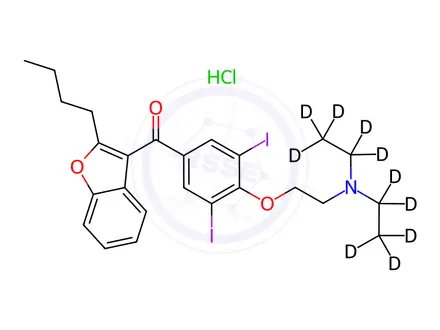
Amiodarone-d10 Hydrochloride
BACK ORDERRS-A103025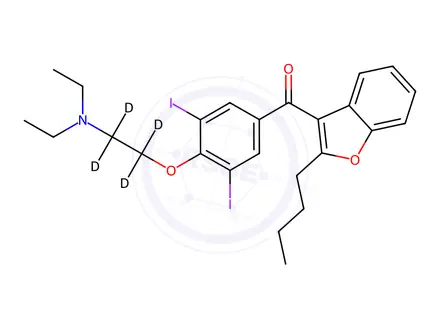
Amiodarone-d4
BACK ORDERRS-I100108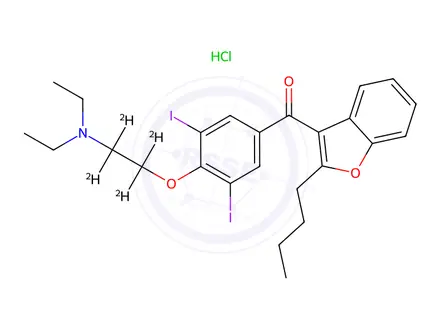
Amiodarone-D4 Hydrochloride
IN STOCKRS-Z400N6K
Des-O-[2-(diethylamino)ethyl]-1-methoxy Amiodarone
BACK ORDERRS-A103004
Desethyl Amiodarone-[D4] Hydrochloride
CUSTOM SYNTHESISRS-I097093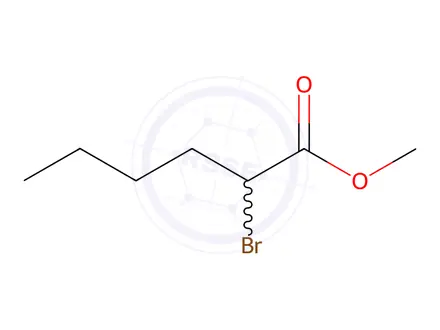
Methyl 2-Bromohexanoate
CUSTOM SYNTHESISRS-A103020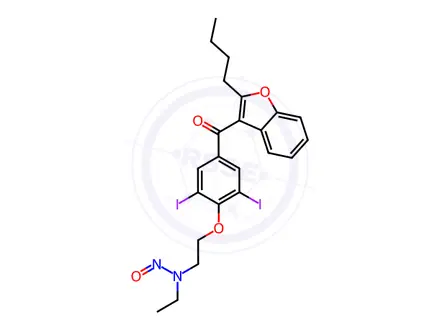
N-Nitroso Amiodarone EP Impurity B
BACK ORDERRS-N001279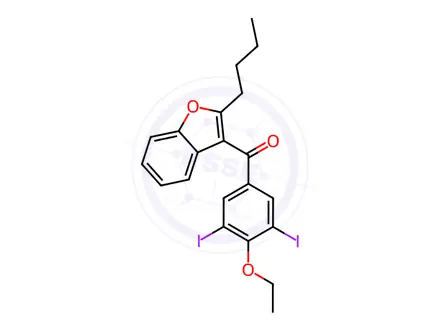
Amiodarone Impurity 2
IN STOCKRS-A103014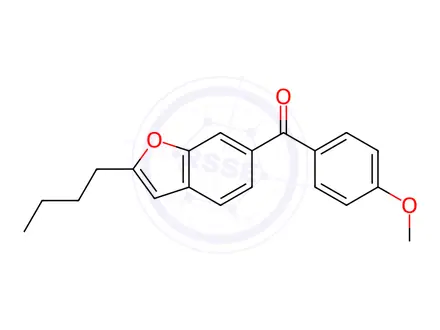
Amiodarone Impurity 7
IN STOCKRS-A103011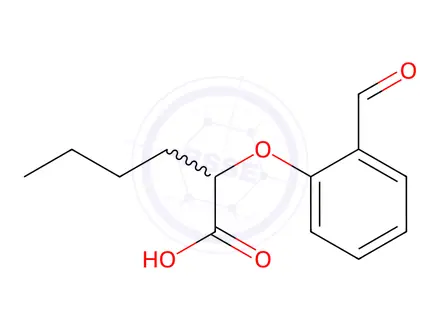
Amiodarone Impurity 12
IN STOCKRS-A103003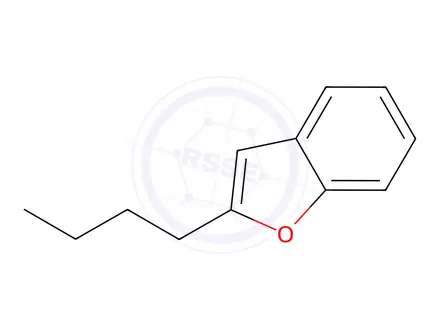
Amiodarone Impurity 14
IN STOCKRS-A103016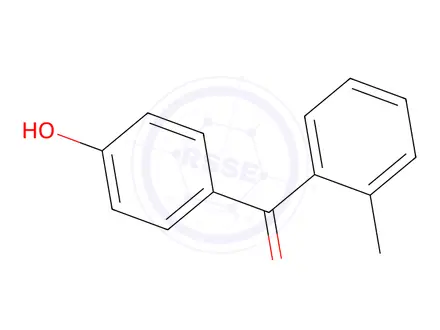
Amiodarone Impurity 14
IN STOCKRS-Z408M4Z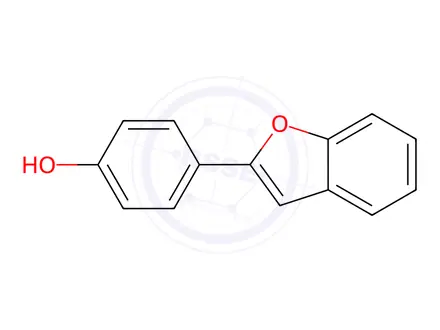
Amiodarone Impurity 14 (26870-36-0)
IN STOCKRS-A103024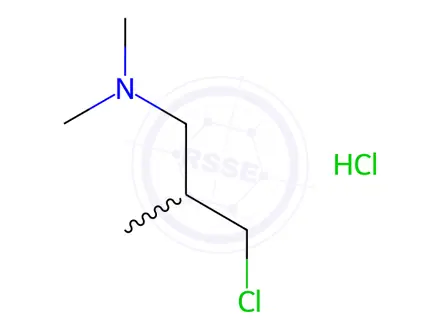
Amiodarone Impurity 18(Hydrochloride)
IN STOCKRS-A103019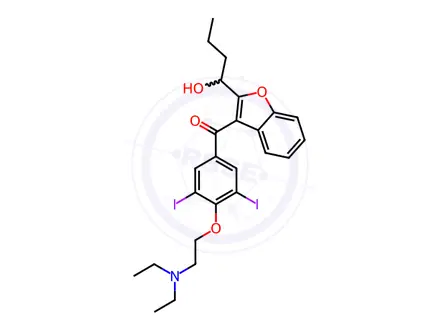
Amiodarone Impurity 22(Hydrochloride)
BACK ORDERRS-A103009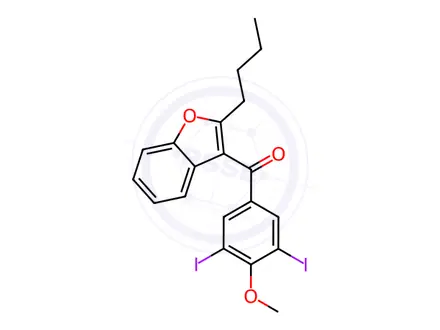
Amiodarone Impurity 32
BACK ORDERRS-A103007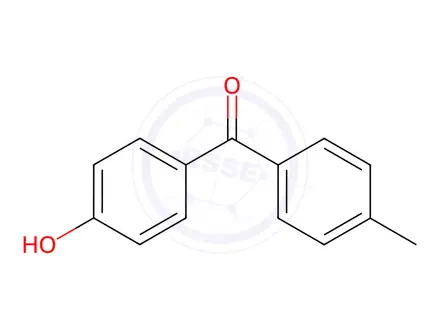
Amiodarone Impurity 37
IN STOCKRS-A103001
Amiodarone Impurity 39
CUSTOM SYNTHESISRS-A103027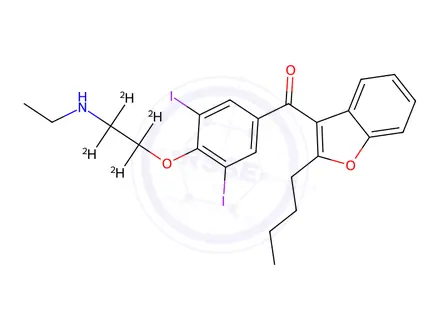
Amiodarone Impurity 39
CUSTOM SYNTHESISRS-Z400KYO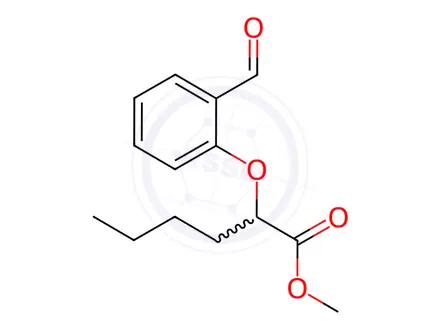
Amiodarone Impurity 40
CUSTOM SYNTHESISRS-A103002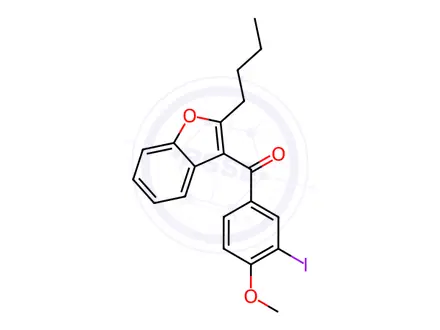
Amiodarone Impurity 41
BACK ORDERRS-A103010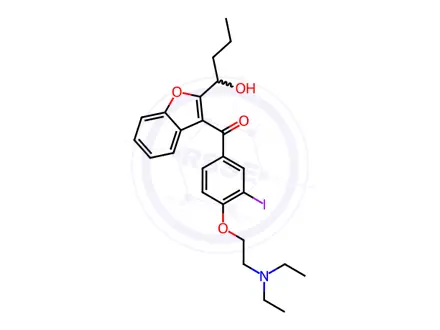
Amiodarone Impurity 42
BACK ORDERRS-A103015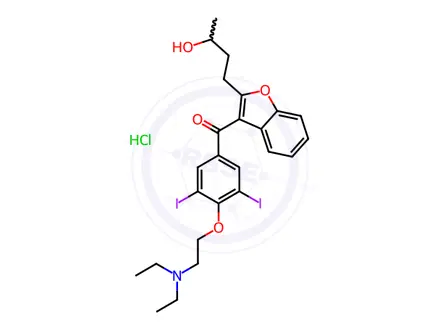
Amiodarone Impurity 43
CUSTOM SYNTHESISRS-A103017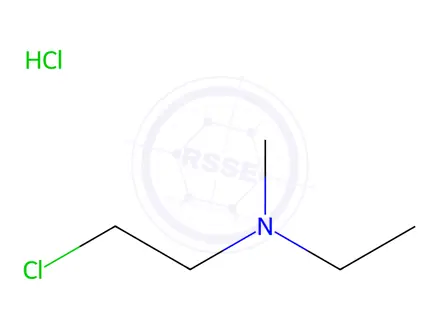
Amiodarone Impurity 44
IN STOCKRS-A103028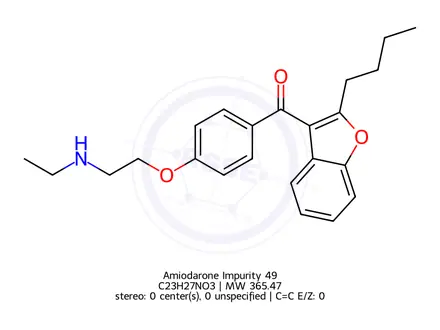
Amiodarone Impurity 49
CUSTOM SYNTHESISRS-A103049
44 reference standards
Further entries held for Amiodarone
90 entries are held in the catalogue without a structure drawing. Each carries a catalogue number and, where one has been assigned, a CAS number; packing, documentation and price are quoted on enquiry.
- Amiodarone EP Impurity B HCl (N-Desethyl Amiodarone HCl)
- Amiodarone EP Impurity B-d4 HCl (N-Desethyl Amiodarone-d4 HCl)
- Amiodarone EP Impurity C (Oxalate Salt)
- Amiodarone EP Impurity C HCl (Deiodo Amiodarone HCl)
- Amiodarone EP Impurity G
- Amiodarone EP Impurity G (HCl Salt)
- Amiodarone EP Impurity G Dihydrochloride
- Amiodarone EP Impurity G(HCl salt form)
- Amiodarone EP Impurity G(Hydrochloride)
- Amiodarone EP Impurity G-d4 HCl
- Amiodarone EP Impurity H HCl (Amiodarone USP Related Compound H)
- Amiodarone EP Impurity H-d4 HCl
- Amiodarone EP Impurity H-d4 HCl (Amiodarone USP Related Compound H-d4)
- Amiodarone Hydrochloride (IPRS/117/16)-from IPC
- Amiodarone Hydrochloride (IPRS/45/11)-from IPC
- Amiodarone Impurities and Related Compound
- Amiodarone Impurity 1
- Amiodarone Impurity 10
- Amiodarone Impurity 11
- Amiodarone Impurity 13
- Amiodarone Impurity 19
- Amiodarone Impurity 19
- Amiodarone Impurity 19(Hydrochloride)
- Amiodarone Impurity 20
- Amiodarone Impurity 20(Hydrochloride)
- Amiodarone Impurity 21
- Amiodarone Impurity 21(Hydrochloride)
- Amiodarone Impurity 23
- Amiodarone Impurity 25
- Amiodarone Impurity 25
- Amiodarone Impurity 25
- Amiodarone Impurity 26
- Amiodarone Impurity 26
- Amiodarone Impurity 27
- Amiodarone Impurity 27
- Amiodarone Impurity 3
- Amiodarone Impurity 31 HCl
- Amiodarone Impurity 34
- Amiodarone Impurity 35
- Amiodarone Impurity 36
- Amiodarone Impurity 37 HCl
- Amiodarone Impurity 37-d4 HCl
- Amiodarone Impurity 4 HCl
- Amiodarone Impurity 45
- Amiodarone Impurity 46
- Amiodarone Impurity 47
- Amiodarone Impurity 48
- Amiodarone Impurity 5
- Amiodarone Impurity 5
- Amiodarone Impurity 5 HCl
- Amiodarone Impurity 50
- Amiodarone Impurity 51
- Amiodarone Impurity 52
- Amiodarone Impurity 53
- Amiodarone Impurity 54
- Amiodarone Impurity 55
- Amiodarone Impurity 56
- Amiodarone Impurity 57
- Amiodarone Impurity 58
- Amiodarone Impurity 59
- Amiodarone Impurity 6
- Amiodarone Impurity 6
- Amiodarone Impurity 6 HCl
- Amiodarone Impurity 60
- Amiodarone Impurity 61
- Amiodarone Impurity 62
- Amiodarone Impurity 63
- Amiodarone Impurity 64
- Amiodarone Impurity 65
- Amiodarone Impurity 66
- Amiodarone Impurity 67
- Amiodarone Impurity 68
- Amiodarone Impurity 7 HCl
- Amiodarone Impurity 8
- Amiodarone Impurity 8 HCl
- Amiodarone Impurity 9
- Amiodarone impurity D
- Amiodarone Impurity D (IMPA074)
- Amiodarone impurity D (Y0000129)
- Amiodarone impurity D CRS (Y0000129)
- Amiodarone impurity E
- Amiodarone Impurity E (IMPA076)
- Amiodarone impurity E (Y0000130)
- Amiodarone Impurity G HCl
- Amiodarone Impurity H
- Amiodarone Keto Amine Impurity
- Amiodarone N-Oxide Hydrochloride
- Amiodarone Related Compound 1
- Amiodarone Related Compound D
- Amiodarone-d4 HCl
Frequently asked
How many Amiodarone-related reference standards do you hold?
Can you supply an Amiodarone impurity that is not listed here?
What documentation is supplied with Amiodarone impurities?
Do you publish prices or a lead time for Amiodarone impurities?
Cannot find the impurity you need? Non-compendial impurities can be quoted from a structure — a CAS number is not required. Write to sales@rssechem.com.