Rupatadine impurities and related standards
Take Rupatadine first as a formula, C26H26ClN3, and a weight, 416; the skeleton is five rings, three of them aromatic, carrying a tertiary amine and a ring nitrogen. The ring count is five, three aromatic, and the molecule carries no stereocentres.
The families to expect are process-related, storage-related and isomeric, and only the middle one responds to a stability programme. An isomer that keeps every functional group and moves one of them around the ring is the variant to watch, because no stress study will ever produce it. The halogen does not degrade on its own, but it opens an elimination route under heat that changes the ring system. The tertiary nitrogen oxidises to the N-oxide and dealkylates under peroxide stress; the N-oxide loses most of its retention in one step.
Three aromatic rings mean the chromophore is the easy part; the hard part is that every analogue absorbs just as strongly. A calculated logP of 5.63 puts the compound and its lipophilic analogues at the back of the run, close enough to need a flat gradient there. Two structures with the same formula need different fragments, and only the tandem experiment gives them. A polar surface area of 29.0 means lipophilicity dominates, and the compound sits late in the gradient with its close analogues.
The first order is usually small, the second usually is not, and the paperwork is part of the delivery: CoA, HPLC chromatogram, mass spectrum.
37 reference standards related to Rupatadine held in the RSSE catalogue — pharmacopoeial impurities, non-compendial impurities, metabolites and labelled analogues where available.
In this group: 29 impurity reference standards · 4 general reference standards · 2 stable isotope labelled standards · 1 drug metabolite standard. CAS numbers are listed for 37 of 37; 37 entries carry a structure drawing.
On this page
37 reference standards
All entries — structure, identifiers and pack sizes
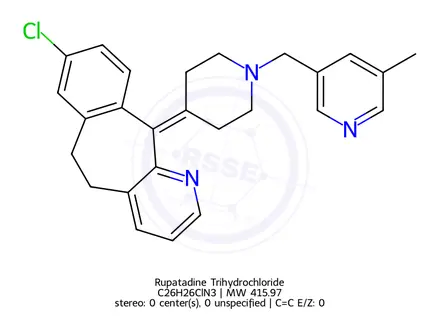
Rupatadine
IN STOCKRS-I009198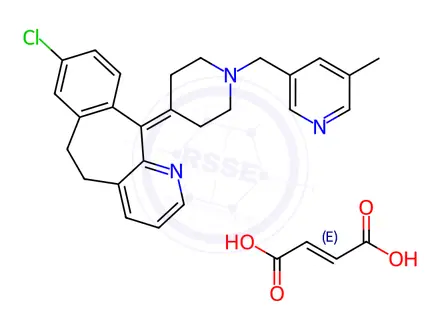
Rupatadine Fumarate
IN STOCKRS-I009206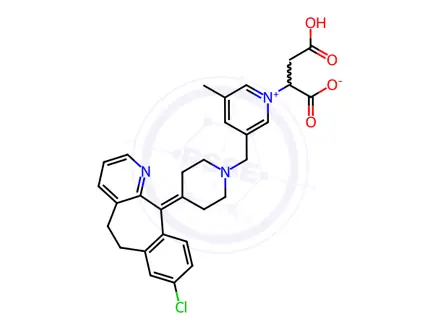
Rupatadine EP Impurity A
IN STOCKRS-R008002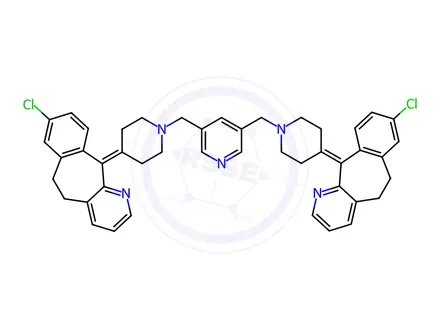
Rupatadine EP Impurity C
IN STOCKRS-R008007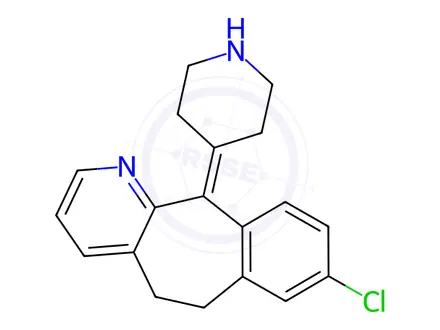
Rupatadine EP Impurity D
IN STOCKRS-U004018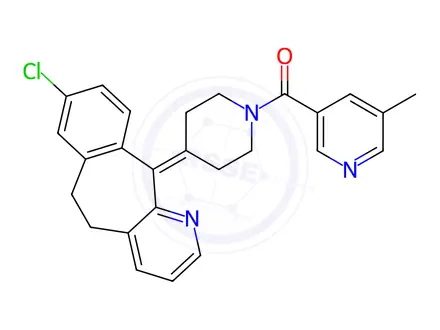
Rupatadine Impurity B
IN STOCKRS-R008009
(5-Methyl-3-pyridinyl)methyl Rupatadine
IN STOCKRS-R008003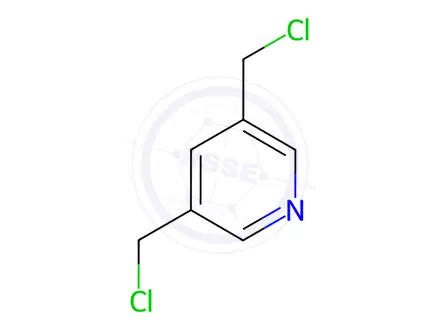
3,5-Bis(chloromethyl)pyridine
IN STOCKRS-I012223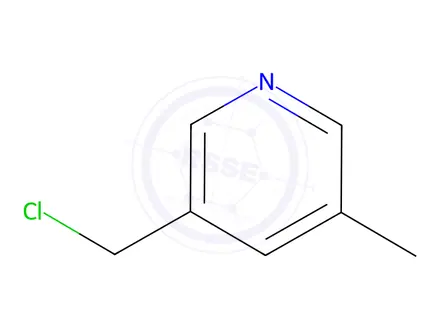
3-Chloromethyl-5-methylpyridine
IN STOCKRS-D110047
5'-[(Desloratadine)methyl] Rupatadine-d8
BACK ORDERRS-R008020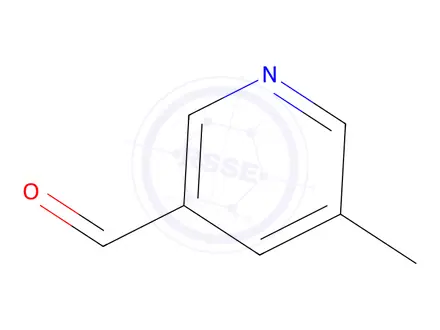
5-Methylpyridine-3-carboxaldehyde
IN STOCKRS-Z393AIS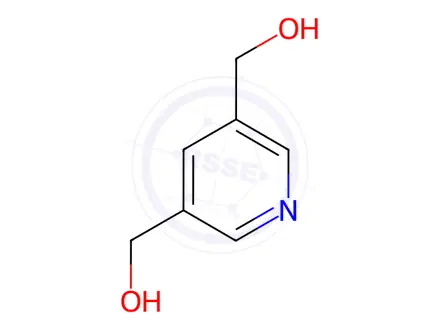
Pyridine-3,5-diyldimethanol
IN STOCKRS-U084413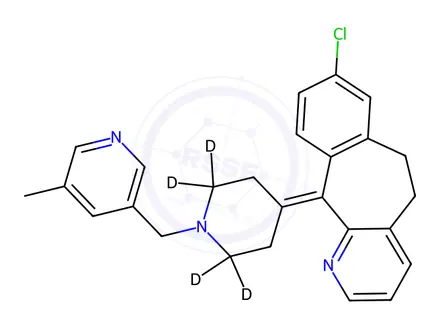
Rupatadine d4
BACK ORDERRS-R008021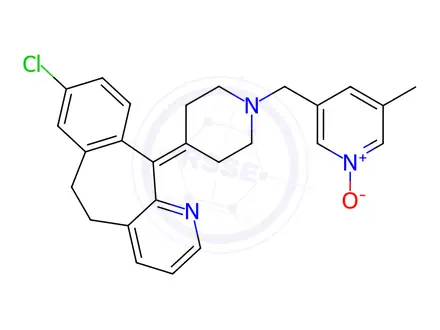
Rupatadine N-oxide
IN STOCKRS-I009058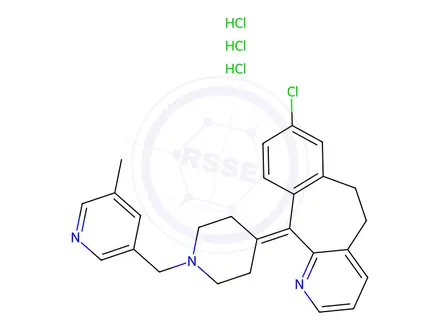
Rupatadine Trihydrochloride
CUSTOM SYNTHESISRS-Z401BF0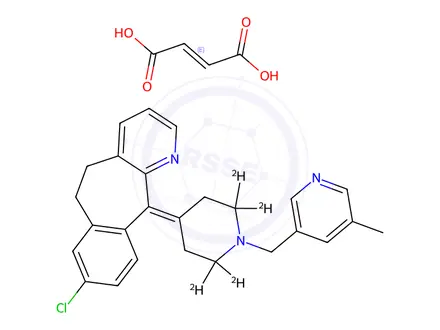
Rupatadine-d4 Fumarate
BACK ORDERRS-Z401DE7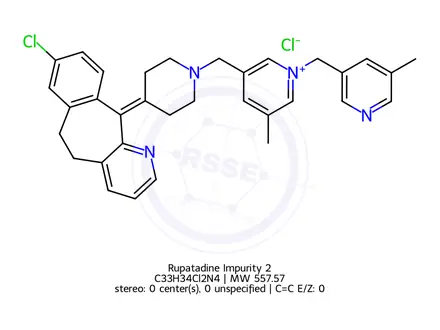
Rupatadine Impurity 2
CUSTOM SYNTHESISRS-R008072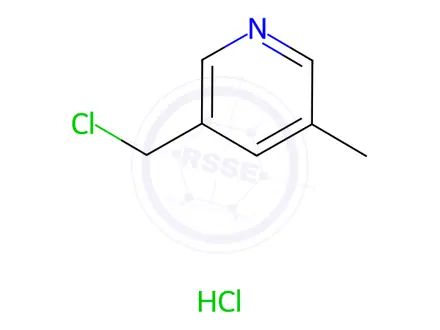
Rupatadine Impurity 6 HCl
IN STOCKRS-R008001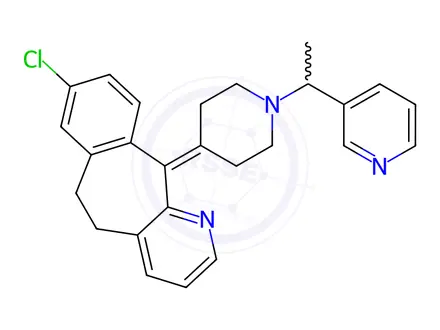
Rupatadine Impurity 21
BACK ORDERRS-R008014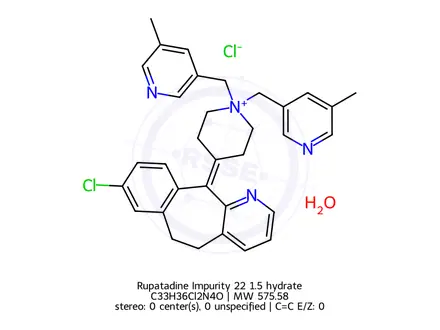
Rupatadine Impurity 22 1.5 hydrate
BACK ORDERRS-I001A96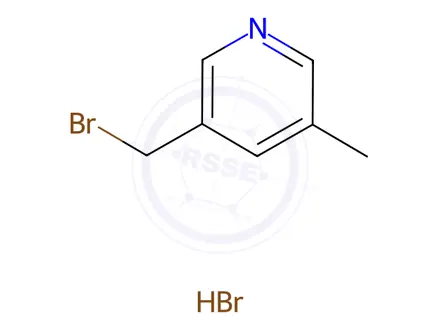
Rupatadine Impurity 28 Hydrobromide
IN STOCKRS-R008016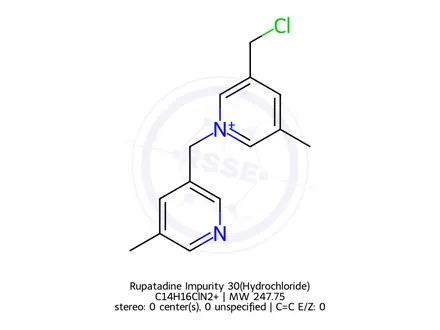
Rupatadine Impurity 30(Hydrochloride)
CUSTOM SYNTHESISRS-R008011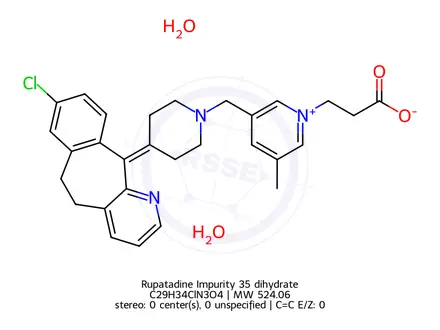
Rupatadine Impurity 35 dihydrate
BACK ORDERRS-I001BFX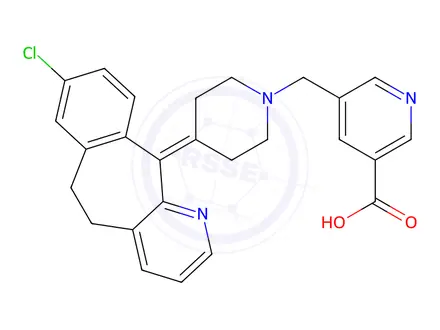
Rupatadine Impurity 43
BACK ORDERRS-Z401B5I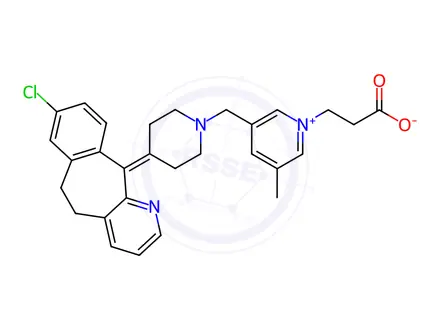
Rupatadine Impurity 44
BACK ORDERRS-R008010
Indinavir Impurity 6 (Indinavir EP Impurity F)
CUSTOM SYNTHESISRS-R008012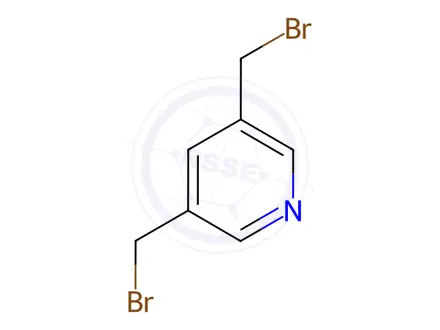
Rupatadine Impurity 46
IN STOCKRS-R008013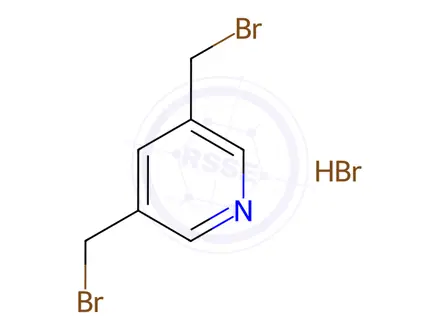
Rupatadine Impurity 47
IN STOCKRS-R008015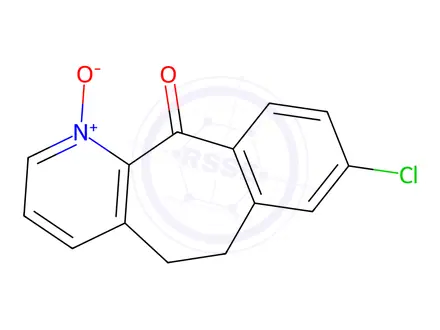
Rupatadine Impurity 48
IN STOCKRS-R008017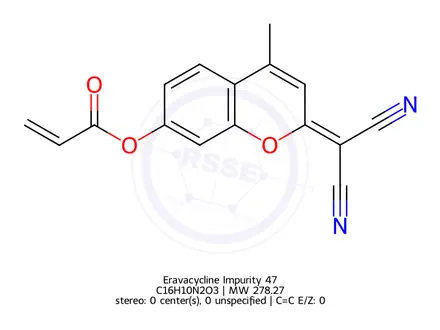
Rupatadine Impurity 49
CUSTOM SYNTHESISRS-R008018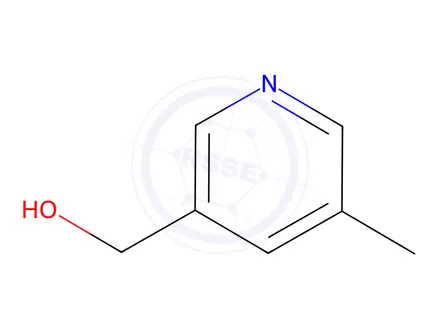
Rupatadine Impurity 51
IN STOCKRS-R008004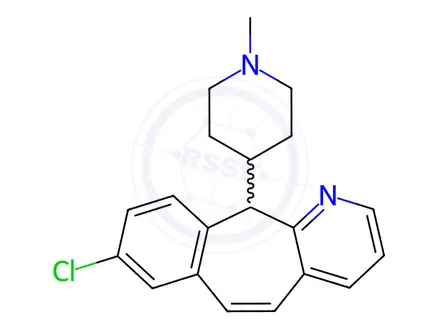
Rupatadine Impurity 52
IN STOCKRS-R008005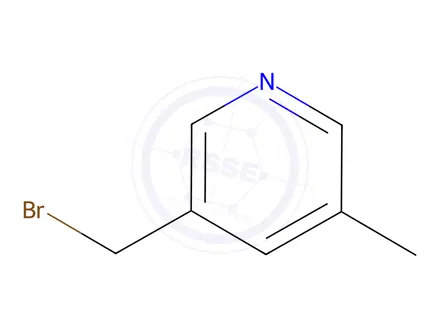
Rupatadine Impurity 53
IN STOCKRS-R008006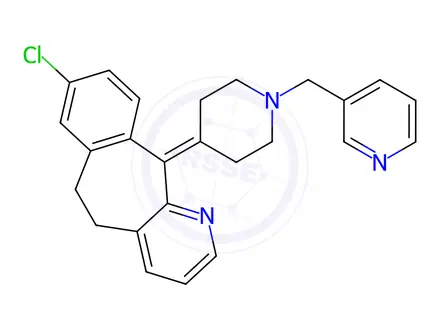
Rupatadine Impurity 54
BACK ORDERRS-R008008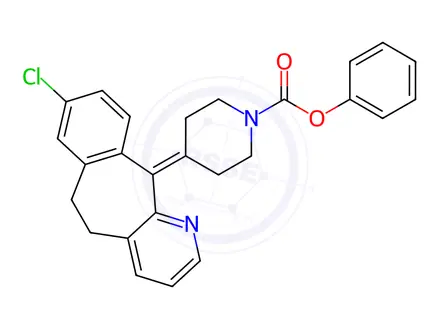
Rupatadine Impurity 55
BACK ORDERRS-R008019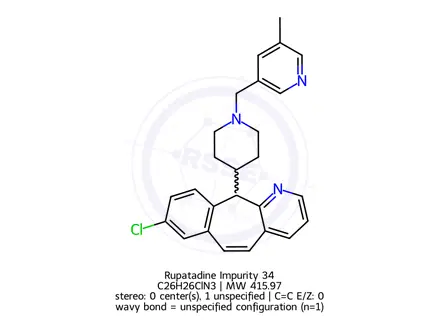
Rupatadine Impurity 56
IN STOCKRS-R008022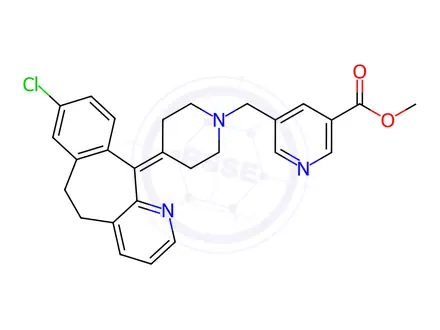
Rupatadine Impurity 57
BACK ORDERRS-R008023
37 reference standards
Further entries held for Rupatadine
101 entries are held in the catalogue without a structure drawing. Each carries a catalogue number and, where one has been assigned, a CAS number; packing, documentation and price are quoted on enquiry.
- (5-Methyl-3-pyridinyl)methyl Rupatadine Hcl
- Rupatadine D6 Tartrate
- Rupatadine Dimer
- Rupatadine for system suitability (Y0001919)
- Rupatadine Fumarate (IPRS/123/13)-from IPC
- Rupatadine Impurities and Related Compound
- Rupatadine Impurity 1
- Rupatadine Impurity 10
- Rupatadine Impurity 10 Fumarate
- Rupatadine Impurity 11
- Rupatadine Impurity 11
- Rupatadine Impurity 12
- Rupatadine Impurity 13
- Rupatadine Impurity 14
- Rupatadine Impurity 14
- Rupatadine Impurity 14 Formate
- Rupatadine Impurity 14 Fumarate
- Rupatadine Impurity 14-d4
- Rupatadine Impurity 15
- Rupatadine Impurity 15
- Rupatadine Impurity 15 Formate
- Rupatadine Impurity 15-d4
- Rupatadine Impurity 16
- Rupatadine Impurity 16-d4
- Rupatadine Impurity 17-d4
- Rupatadine Impurity 19
- Rupatadine Impurity 19
- Rupatadine Impurity 19
- Rupatadine Impurity 19 Formate
- Rupatadine Impurity 2 Chloride
- Rupatadine Impurity 2 Chloride TriHCl
- Rupatadine Impurity 20
- Rupatadine Impurity 20
- Rupatadine Impurity 20 Chloride HCl Salt
- Rupatadine Impurity 20-d4
- Rupatadine Impurity 22 HBr
- Rupatadine Impurity 23
- Rupatadine Impurity 23 Fumarate
- Rupatadine Impurity 26
- Rupatadine Impurity 26 Fumarate
- Rupatadine Impurity 27
- Rupatadine Impurity 27
- Rupatadine Impurity 27-d4
- Rupatadine Impurity 29
- Rupatadine Impurity 3
- Rupatadine Impurity 3 Trihydrochloride
- Rupatadine Impurity 30-d4
- Rupatadine Impurity 31-d4
- Rupatadine Impurity 32
- Rupatadine Impurity 32
- Rupatadine Impurity 33
- Rupatadine Impurity 33
- Rupatadine Impurity 36
- Rupatadine Impurity 37
- Rupatadine Impurity 38
- Rupatadine Impurity 39
- Rupatadine Impurity 41
- Rupatadine Impurity 43
- Rupatadine Impurity 50
- Rupatadine Impurity 58
- Rupatadine Impurity 59
- Rupatadine Impurity 60
- Rupatadine Impurity 61
- Rupatadine Impurity 62
- Rupatadine Impurity 63
- Rupatadine Impurity 64
- Rupatadine Impurity 65
- Rupatadine Impurity 66
- Rupatadine Impurity 67
- Rupatadine Impurity 68
- Rupatadine Impurity 69
- Rupatadine Impurity 7
- Rupatadine Impurity 7 HCl
- Rupatadine Impurity 7-d4
- Rupatadine Impurity 70
- Rupatadine Impurity 71
- Rupatadine Impurity 72
- Rupatadine Impurity 73
- Rupatadine Impurity 74
- Rupatadine Impurity 75
- Rupatadine Impurity 76
- Rupatadine Impurity 77
- Rupatadine Impurity 78
- Rupatadine Impurity 8
- Rupatadine Impurity 8 HCl
- Rupatadine Impurity 9
- Rupatadine Impurity 9
- Rupatadine Impurity A
- Rupatadine Impurity D
- Rupatadine Impurity E
- Rupatadine Impurity J
- Rupatadine N-Oxide (5-Methylpyridine N-Oxide)
- Rupatadine N-Oxide ([1,2-b]Pyridine N-Oxide)
- Rupatadine N-Oxide (Piperidine N-Oxide)
- Rupatadine N-Oxide Impurity 2
- Rupatadine piperidine 1-oxide
- Rupatadine-d4 Fumarate
- Rupatadine-d4 N-oxide
- Rupatadine-d4 N-Oxide 1
- Rupatadine-D6
- Rupatadine-d7 Fumarate
Frequently asked
How many Rupatadine-related reference standards do you hold?
Can you supply a Rupatadine impurity that is not listed here?
What documentation is supplied with Rupatadine impurities?
Do you publish prices or a lead time for Rupatadine impurities?
Cannot find the impurity you need? Non-compendial impurities can be quoted from a structure — a CAS number is not required. Write to sales@rssechem.com.